
Creating Seamless B2B Integrations: Leveraging Advanced AI Tools for Better Collaboration

In an increasingly interconnected digital economy, B2B integrations are essential for enabling real-time collaboration, faster operations, and intelligent decision-making between enterprises. However, traditional integration approaches often fall short when it comes to scalability, agility, and contextual understanding. Advanced AI tools are reshaping how businesses approach B2B integrations—making them more seamless, dynamic, and intelligent than ever before. Let’s explore how AI-driven strategies are transforming B2B collaboration and the key technologies powering the shift. The Pain Points of Traditional B2B Integration Businesses looking to connect with partners or vendors typically face: AI can mitigate these challenges by enabling smarter data exchange, automated workflows, and predictive collaboration. How AI Enhances B2B Integrations Here’s where AI is making a major difference: Function Traditional B2B Integration AI-Driven Enhancement Data Mapping Manual, rule-based AI auto-mapping via NLP and pattern recognition Error Handling Static validation rules AI predicts and auto-corrects anomalies Process Automation Hardcoded workflows AI dynamically adapts to context Partner Onboarding Lengthy, manual AI guides via chatbots, suggests configurations Collaboration Insights Delayed reports Real-time dashboards + predictive analytics Key AI Tools & Technologies Powering B2B Integration 1. Natural Language Processing (NLP) 2. Machine Learning for Data Reconciliation 3. Intelligent API Gateways 4. Conversational AI 5. Predictive Analytics for Partner Management Ensuring Security and Compliance B2B integrations must still adhere to strict governance. AI assists with: Best Practices for AI-Driven B2B Integrations Conclusion AI transforms B2B integration from a brittle, slow-moving process into a flexible, intelligent, and collaborative experience. Whether you’re syncing catalogs, processing orders, or analyzing partner performance—AI helps you act faster, smarter, and more securely. The future of B2B isn’t just interconnected—it’s intelligently automated.
Optimizing Cloud Infrastructure: Practical DevOps Strategies with AI Integration

In today’s fast-paced digital landscape, businesses rely on cloud infrastructure not just for scalability, but also for agility, reliability, and cost efficiency. However, as cloud environments become increasingly complex, manual optimization becomes nearly impossible. This is where AI-powered DevOps enters the picture—bringing intelligence, automation, and real-time decision-making to cloud management. In this blog, we explore practical strategies to optimize your cloud infrastructure using DevOps principles and AI integration. The Challenges of Modern Cloud Infrastructure Cloud platforms like AWS, Azure, and Google Cloud offer tremendous power, but DevOps teams face recurring challenges: AI can detect patterns, automate decisions, and adapt faster than traditional scripts or dashboards. Where AI Enhances Cloud DevOps Here’s how AI supports cloud optimization across your DevOps workflow: Area Traditional Approach AI-Enhanced Approach Monitoring Manual dashboards Predictive alerts & anomaly detection Scaling Rule-based autoscaling Demand forecasting with ML Cost Management Static budgets & tagging Intelligent right-sizing & spot instance suggestions Deployment Health Basic logs Pattern recognition in CI/CD failures Security Threshold-based alerts AI-driven threat detection in real-time DevOps + AI Strategies for Cloud Optimization 1. Predictive Auto-Scaling Use time-series forecasting models (like Prophet or LSTM) to scale up/down infrastructure before demand spikes. This reduces latency and cost compared to reactive scaling. 2. AI-Powered Resource Allocation Train ML models on historical usage to: Tools: AWS Compute Optimizer, Azure Advisor, Google Active Assist 3. Intelligent Monitoring & Anomaly Detection AI models can scan logs and metrics to identify anomalies early—before they become outages. This includes: Tools: Datadog + AI Watchdog, Dynatrace Davis, Prometheus + custom ML models 4. Automated Incident Response Combine AI with Infrastructure as Code (IaC) to trigger automated fixes: Use Runbooks + AI to reduce Mean Time to Resolution (MTTR). 5. Cost Optimization with AI FinOps Use AI to analyze billing data and: Integrate this into your CI/CD pipelines to gate builds that exceed cost thresholds. Integrating These Strategies in DevOps Pipelines Case Study: AI in Action Challenge: A SaaS company was overspending on compute resources during off-peak hours. Solution: They used a simple ML model to predict usage patterns and scale down instances proactively at night. Results: Recommended Tools & Platforms Tool Use Case AWS SageMaker / Azure ML / Vertex AI Model development and deployment Grafana + ML plugins Smart dashboards and visualizations Kubeflow ML workflow orchestration in Kubernetes CloudHealth or Apptio Cloudability AI-based cost optimization Elastic APM + OpenTelemetry + ML Intelligent tracing and root cause analysis Conclusion Optimizing cloud infrastructure is no longer just a matter of adjusting scripts or adding more automation. With AI integrated into your DevOps workflows, you gain real-time insights, predictive control, and intelligent automation that improves cost-efficiency, uptime, and scalability. Start with one use case, experiment with a prototype, and scale as you validate value. The future of cloud DevOps is not just automated—it’s AI-driven.
From Concept to Execution: Rapid Prototyping of AI-Powered Solutions in DevOps

As DevOps continues to evolve, artificial intelligence is no longer a buzzword—it’s a catalyst for innovation. Integrating AI into DevOps enables faster releases, predictive maintenance, intelligent automation, and smarter decision-making. But turning an AI-driven DevOps idea into a working solution quickly is a challenge without a structured prototyping approach. In this blog, we explore how to go from concept to a functioning prototype of AI-powered solutions in DevOps—rapidly, efficiently, and with purpose. Why AI in DevOps? AI augments DevOps pipelines by: But AI integration isn’t plug-and-play—it requires domain-specific customization. That’s where rapid prototyping comes into play. What Is Rapid Prototyping in DevOps? Rapid prototyping is a fast-paced, iterative approach to building working models of solutions. In the context of AI + DevOps, it involves: This helps in validating feasibility before full-scale development. Step-by-Step: Prototyping an AI Solution in DevOps 1. Define the Problem and Use Case Clearly articulate the challenge: “We want to predict deployment failures based on historical CI/CD logs.” 2. Collect and Preprocess Data 3. Choose the Right Model and Tools 4. Develop a Working Prototype 5. Integrate into CI/CD 6. Evaluate, Iterate, and Expand Real-World Use Cases Security, Governance & Ethics As with any AI solution, ensure: Tools and Platforms to Accelerate Prototyping Tool Purpose MLflow Track model experiments Kubeflow Pipelines Automate AI workflows Azure ML / SageMaker / Vertex AI Managed AI services for rapid deployment Grafana + Prometheus Monitor AI performance in pipelines Docker & Kubernetes Containerize and scale prototypes Conclusion Prototyping AI-driven DevOps solutions doesn’t have to be slow or expensive. With the right tools, data, and focus, you can go from concept to execution in weeks—not months. Start small, validate quickly, and scale confidently.
How to Leverage AWS, Azure, and Google Cloud for Building Robust Marketplace Platforms
The marketplace model—whether B2B, B2C, or P2P—has become the backbone of digital commerce. But building and scaling such platforms requires more than just a sleek UI and a good marketing strategy. Cloud computing is at the heart of modern, robust marketplaces, and the three major players—Amazon Web Services (AWS), Microsoft Azure, and Google Cloud Platform (GCP)—offer powerful tools to bring your vision to life. In this article, we explore how each cloud provider can help build scalable, secure, and high-performing marketplace platforms. Why Cloud Infrastructure Matters for Marketplaces A modern marketplace demands: Cloud providers offer all this and more—on a pay-as-you-go model—enabling rapid MVP development and global expansion. Using AWS to Build Marketplace Platforms Strengths Key Services for Marketplaces Using Azure to Build Marketplace Platforms Strengths Key Services for Marketplaces Using Google Cloud Platform (GCP) to Build Marketplace Platforms Strengths Key Services for Marketplaces Multicloud or Single Cloud? While each provider has strengths, many successful marketplaces adopt a multi-cloud strategy: This approach avoids vendor lock-in and lets teams take advantage of the best features across providers. Security & Compliance Considerations Each cloud offers: Ensure you configure VPCs, IAM policies, and monitoring tools correctly to secure sensitive customer and transaction data. Conclusion Cloud platforms like AWS, Azure, and Google Cloud are not just hosting providers—they are full-fledged ecosystems that provide the tools, services, and scalability needed to launch and grow world-class marketplace platforms. By leveraging the strengths of each, you can build a robust, high-performance, secure, and scalable digital marketplace tailored to your business model. Technology is constantly evolving, and software development trends are no exception. As the world moves into the future, the demand for custom software continues to grow, leading to the emergence of new and innovative trends. Here are some of the custom software development trends that will dominate the industry in 2023. 1. Low-Code and No-Code Platforms Low-code and no-code platforms are set to become increasingly popular over the next few years. These platforms allow developers to quickly and easily create software applications with minimal coding. This trend is expected to be driven by the increasing demand for custom software and the need for businesses to quickly develop and deploy applications. 2. Cloud Computing and Storage The cloud has become an integral part of modern computing, and this trend is set to continue in the coming years. Cloud computing and storage will allow businesses to access their data and applications from anywhere in the world. This will reduce the need for hardware and make it easier for businesses to scale their operations. 3. Artificial Intelligence and Machine Learning Artificial intelligence and machine learning are already making a big impact on the software development industry. AI-driven software applications are becoming increasingly popular, as they allow developers to create more intelligent and powerful applications. AI and machine learning are expected to become a major part of custom software development in the coming years. 4. Internet of Things The Internet of Things (IoT) is another trend that is set to become increasingly popular in the near future. IoT-enabled applications allow developers to create applications that can interact with physical devices. This will enable developers to create applications that can control and monitor physical objects, such as home appliances and industrial machinery. 5. Blockchain Blockchain technology is expected to be a major player in the software development industry in 2023. Blockchain-based applications will allow developers to create secure, distributed applications that are resistant to hacking and tampering. This will enable developers to create applications that are more secure and reliable. 6. Augmented and Virtual Reality Augmented and virtual reality are becoming increasingly popular in the software development industry. AR and VR applications allow developers to create immersive, interactive experiences that can be used in a variety of applications. This trend is expected to continue in the coming years, as more developers look to create software applications that utilize these technologies. 7. Integration of Big Data Big data is becoming an important tool for businesses, and this trend is expected to continue in 2023. Big data integration will allow developers to create more powerful applications that can process and analyze large amounts of data. This will make it easier for businesses to gain insights from their data and make more informed decisions. 8. Automation Automation is set to become a major trend in the software development industry in 2023. Automation will allow developers to quickly and easily create applications that can automate tasks and processes. This will make it easier for businesses to streamline their operations and reduce their reliance on manual labor. 9. Security Security is always a major concern for businesses, and this trend is set to become even more important in the coming years. Developers will need to create applications that are secure and reliable, and they will need to ensure that their applications are compliant with industry regulations. This will be an important factor in determining the success of custom software applications in the future. 10. Mobile-First Design Mobile devices are becoming increasingly popular, and this trend is expected to continue in 2023. Mobile-first design will allow developers to create applications that are optimized for mobile devices. This will make it easier for businesses to reach their customers and provide their users with a better experience. 11. DevOps DevOps is a set of processes and tools that allow developers to quickly and efficiently develop and deploy applications. This trend is expected to become increasingly popular in the coming years, as businesses look to streamline their development and deployment processes. 12. User Experience Design User experience design is an important factor in the success of any application, and this trend is set to become even more important in the coming years. Developers will need to create applications that are easy to use and intuitive, as this will ensure that their users have a positive experience. Important to Consider Software Development Future Trends Software development future trends are important to consider as they will shape the way software is
AI-Driven DevOps: Streamlining CI/CD Pipelines for Faster, Secure Deployments
In today’s fast-paced digital landscape, organizations must release software updates rapidly without compromising on quality or security. DevOps has already revolutionized the software development lifecycle by bridging the gap between development and operations. Now, with the integration of Artificial Intelligence (AI), DevOps is entering a new era of automation, intelligence, and efficiency. What is AI-Driven DevOps? AI-Driven DevOps refers to the use of Artificial Intelligence and Machine Learning (ML) techniques to enhance and automate DevOps practices, particularly within the Continuous Integration/Continuous Deployment (CI/CD) pipeline. AI brings intelligent decision-making to DevOps processes, helping teams predict failures, optimize builds, and enhance system performance in real-time. Key Benefits of AI in CI/CD Pipelines 1. Accelerated Deployments AI helps detect bottlenecks in the pipeline and recommends optimizations. It can prioritize test cases, predict which areas are most likely to break, and suggest fixes—reducing build and deployment times significantly. 2. Enhanced Security AI can analyze code and deployment logs in real-time to detect vulnerabilities, anomalies, or malicious behaviors. This proactive approach helps secure the software supply chain during the CI/CD process. 3. Intelligent Monitoring and Feedback Machine learning models analyze application logs, performance metrics, and user behavior to identify issues before they impact end users. Automated feedback loops ensure that issues are resolved faster with minimal manual intervention. 4. Improved Test Automation AI can generate test scripts, identify redundant tests, and select the most relevant test cases for each code change. This reduces testing time and increases test coverage. 5. Predictive Analytics Using historical data, AI can predict potential failures in deployments or performance issues post-deployment. Teams can act on these predictions to avoid downtime and rollback scenarios. How AI Enhances Each Stage of the CI/CD Pipeline Pipeline Stage AI Enhancement Code Commit Intelligent code review, anomaly detection Build Predictive failure analysis, build optimization Test Smart test selection, automated script generation Deploy Risk analysis, anomaly prediction Monitor Behavior analysis, alert prioritization Real-World Use Cases Getting Started with AI in DevOps Conclusion AI is not just a buzzword—it’s a transformative force that can supercharge DevOps pipelines. By integrating AI into CI/CD processes, businesses can achieve faster releases, improved code quality, and secure, reliable deployments at scale. The future of DevOps is intelligent, and it’s already here.
Building Scalable Marketplaces: A Practical Guide to B2B and B2C Solutions

Introduction In today’s rapidly evolving digital economy, online marketplaces are redefining how businesses and consumers connect. Whether you’re launching a B2B platform for streamlined supply chains or a B2C solution to reach global consumers, scalability is critical. This blog explores key architectural strategies, technology choices, and operational insights to build a robust, future-ready marketplace. Why Scalability Matters As your marketplace grows, so do your users, transactions, and data volumes. Without a scalable foundation, your platform may face: Scalability ensures that your platform performs reliably under increasing loads while remaining cost-effective and responsive. Core Components of a Scalable Marketplace 1. Modular Architecture Use a microservices-based approach to isolate functions like user management, payments, search, and inventory. This allows independent scaling and deployment. 2. Cloud-Native Infrastructure Platforms like AWS, Azure, or Google Cloud offer autoscaling, global CDN distribution, and serverless options to meet demand flexibly. 3. Flexible Data Engineering Implement scalable pipelines using Apache Spark, AWS Glue, or Snowflake for real-time analytics and decision-making. 4. Search & Personalization Use ElasticSearch, AI/ML models, and recommendation engines to improve product discovery and user engagement. 5. Secure and Seamless Transactions Integrate trusted payment gateways and implement secure authentication with OAuth2.0, SAML, or multi-factor authentication. B2B vs B2C: Key Differences Aspect B2B Marketplaces B2C Marketplaces User Base Limited, high-value clients Wide, diverse customer base Sales Cycle Long, negotiation-driven Short, fast-paced Features Bulk pricing, invoicing, RFQs Product reviews, flash sales, wishlists Onboarding Manual vetting or partner tiers Self-service signup Success Story: [Client X – Optional Section] Example: We helped a startup scale their B2C fashion marketplace using AWS Lambda, React, and Redshift, reducing page load time by 35% and cutting infrastructure costs by 20%. Key Takeaways Need Help Scaling Your Marketplace? Whether you’re building from scratch or scaling an existing platform, our experts in AI, data engineering, and full-stack development can help. [Contact us] today to learn more.
Make the Future of Software Development Yours with Trends in 2023
Technology is constantly evolving, and software development trends are no exception. As the world moves into the future, the demand for custom software continues to grow, leading to the emergence of new and innovative trends. Here are some of the custom software development trends that will dominate the industry in 2023. 1. Low-Code and No-Code Platforms Low-code and no-code platforms are set to become increasingly popular over the next few years. These platforms allow developers to quickly and easily create software applications with minimal coding. This trend is expected to be driven by the increasing demand for custom software and the need for businesses to quickly develop and deploy applications. 2. Cloud Computing and Storage The cloud has become an integral part of modern computing, and this trend is set to continue in the coming years. Cloud computing and storage will allow businesses to access their data and applications from anywhere in the world. This will reduce the need for hardware and make it easier for businesses to scale their operations. 3. Artificial Intelligence and Machine Learning Artificial intelligence and machine learning are already making a big impact on the software development industry. AI-driven software applications are becoming increasingly popular, as they allow developers to create more intelligent and powerful applications. AI and machine learning are expected to become a major part of custom software development in the coming years. 4. Internet of Things The Internet of Things (IoT) is another trend that is set to become increasingly popular in the near future. IoT-enabled applications allow developers to create applications that can interact with physical devices. This will enable developers to create applications that can control and monitor physical objects, such as home appliances and industrial machinery. 5. Blockchain Blockchain technology is expected to be a major player in the software development industry in 2023. Blockchain-based applications will allow developers to create secure, distributed applications that are resistant to hacking and tampering. This will enable developers to create applications that are more secure and reliable. 6. Augmented and Virtual Reality Augmented and virtual reality are becoming increasingly popular in the software development industry. AR and VR applications allow developers to create immersive, interactive experiences that can be used in a variety of applications. This trend is expected to continue in the coming years, as more developers look to create software applications that utilize these technologies. 7. Integration of Big Data Big data is becoming an important tool for businesses, and this trend is expected to continue in 2023. Big data integration will allow developers to create more powerful applications that can process and analyze large amounts of data. This will make it easier for businesses to gain insights from their data and make more informed decisions. 8. Automation Automation is set to become a major trend in the software development industry in 2023. Automation will allow developers to quickly and easily create applications that can automate tasks and processes. This will make it easier for businesses to streamline their operations and reduce their reliance on manual labor. 9. Security Security is always a major concern for businesses, and this trend is set to become even more important in the coming years. Developers will need to create applications that are secure and reliable, and they will need to ensure that their applications are compliant with industry regulations. This will be an important factor in determining the success of custom software applications in the future. 10. Mobile-First Design Mobile devices are becoming increasingly popular, and this trend is expected to continue in 2023. Mobile-first design will allow developers to create applications that are optimized for mobile devices. This will make it easier for businesses to reach their customers and provide their users with a better experience. 11. DevOps DevOps is a set of processes and tools that allow developers to quickly and efficiently develop and deploy applications. This trend is expected to become increasingly popular in the coming years, as businesses look to streamline their development and deployment processes. 12. User Experience Design User experience design is an important factor in the success of any application, and this trend is set to become even more important in the coming years. Developers will need to create applications that are easy to use and intuitive, as this will ensure that their users have a positive experience. Important to Consider Software Development Future Trends Software development future trends are important to consider as they will shape the way software is developed in the future. As technology advances, software development trends will evolve to keep up with the changing times. One trend that is likely to continue is the increasing use of machine learning (ML) and artificial intelligence (AI). AI can be used to automate tasks, allowing developers to focus on more complex tasks and develop software faster and more efficiently. AI can also be used to create intelligent user interfaces that can learn from user input and provide better user experiences. Another trend that is likely to continue is the move toward cloud-based applications. Cloud-based applications are becoming increasingly popular due to their ability to provide scalability, cost-effectiveness, and increased security. Cloud-based applications can also be easily integrated with existing systems and can be used to access data from multiple sources. Mobile application development is also likely to be a major trend in the future. With the increasing popularity of smartphones and tablets, mobile applications are becoming increasingly important for businesses. Mobile applications are becoming more powerful and easier to use, making them essential tools for businesses. Finally, another trend that is likely to continue is a focus on user experience. User experience is becoming increasingly important as users are becoming more demanding and expect more from their software. Developers need to focus on creating an intuitive and easy-to-use user interface that provides an enjoyable user experience. These are just a few of the trends that are likely to shape the software development industry in the future. It is important for developers to stay
The Ultimate Guide to AWS Cloud Consulting Services

As one of the leading cloud providers, AWS has been offering comprehensive cloud consulting services for years. With an ever-growing list of services and features, it can be difficult to know where to start when it comes to leveraging the power of the cloud. This is where AWS cloud consulting services can help. With a team of experienced professionals, AWS cloud consulting services can help organizations leverage the power of the cloud to optimize their operations and gain a competitive edge. The ultimate guide to AWS cloud consulting services provides an in-depth look at the features and benefits of leveraging the power of the cloud. It covers topics such as cloud architecture, cloud migration, DevOps, security, analytics, and more. Cloud architecture is an important part of any cloud consulting engagement. AWS cloud consultants can help organizations design the right architecture for their specific needs. This includes planning the right infrastructure, selecting the right services, and ensuring that the cloud architecture is optimized for performance and scalability. Cloud migration is another critical part of any cloud consulting engagement. AWS cloud consultants can help organizations migrate their applications and data from their on-premise environment to the cloud. This includes selecting the right services and ensuring that the migration is seamless and secure. What is AWS Cloud Consulting and What Benefits Does It Provide? AWS Cloud Consulting is a type of consulting service that helps businesses use Amazon Web Services (AWS) cloud technology to their advantage. This type of consulting is typically provided by a third-party expert who has expertise in the AWS platform and can help businesses find the best way to utilize cloud services to enhance their operations. AWS Cloud Consulting can provide businesses with a range of benefits, such as reducing costs, improving efficiency and scalability, and increasing the availability of their services. By leveraging the cloud, businesses can quickly implement new applications, scale up or down when needed, and easily store data in the cloud. Additionally, AWS Cloud Consulting can help businesses improve security and compliance with industry regulations. AWS Cloud Consulting also provides businesses with access to a wide range of specialized tools and services. These tools can help businesses build and manage their cloud environment, as well as monitor and measure performance. Furthermore, AWS Cloud Consulting can provide businesses with guidance on best practices for cloud computing, such as disaster recovery, data protection, and cost optimization. Overall, AWS Cloud Consulting is a great way for businesses to take advantage of cloud technology and maximize the potential of their operations. By leveraging the expertise of a third-party expert, businesses can ensure that their cloud environment is optimized for their specific needs, while also taking advantage of the cost savings, scalability, and flexibility of the cloud. What Are the Different Types of AWS Cloud Consulting Services Available? AWS cloud consulting services are becoming increasingly popular in the industry today, as more and more businesses are moving to the cloud for their data storage and infrastructure needs. AWS cloud consulting services provide organizations with expertise in the areas of application development, deployment, and management. This type of consulting helps businesses to make the most of the power and scalability of the AWS cloud platform. When it comes to AWS cloud consulting services, there are a few different types available. The most common services include DevOps, application development & deployment on the cloud platform, serverless architecture & microservices development, and cost optimization. DevOps services involve the integration of software development, operations, and deployment. With this type of service, businesses can quickly and efficiently deploy new applications, features, and services to the cloud platform. DevOps solutions are designed to help businesses automate and streamline their application development and deployment processes. Application development & deployment on the cloud platform is another popular AWS cloud consulting service. This type of service helps businesses create and deploy applications and services on the AWS cloud platform. This includes developing custom applications as well as deploying existing applications on the cloud. Serverless architecture & microservices development is also becoming increasingly popular with AWS cloud consulting services. This type of service helps businesses to create and deploy applications and services without having to manage the underlying infrastructure. This is especially useful for businesses that don’t have the time or resources to manage their own servers. Finally, cost optimization is another type of AWS cloud consulting service that helps businesses to reduce costs associated with their cloud infrastructure. Cost optimization services include optimizing the pricing model, choosing the best infrastructure options, and leveraging the power of the cloud platform to reduce total cost of ownership. By taking advantage of these AWS cloud consulting services, businesses can save time and money while also ensuring that their applications and services are always running smoothly. AWS cloud consulting services are essential for businesses that want to make the most of their cloud platform. How to Get Started with an AWS Cloud Consulting Service? Are you an experienced IT consultant looking for an opportunity to take your career to the next level? If so, you may want to explore the potential of launching an AWS Cloud Consulting Service. AWS (Amazon Web Services) is a cloud computing platform that provides users with a wide range of services and solutions. It provides users with access to a variety of cloud-based technologies, such as storage, databases, analytics, and more. It also provides users with the ability to develop and deploy applications and services in the cloud. Starting an AWS Cloud Consulting Service is a great way to capitalize on the growing demand for cloud-based solutions. With the right skills and knowledge, you can help businesses take advantage of the cost and scalability of the cloud. Here are some of the steps you need to take to get started with an AWS Cloud Consulting Service: Launching an AWS Cloud Consulting Service is a great way to capitalize on the growing demand for cloud-based solutions. By following the steps outlined above, you can get started with your
Deploy Faster with DevOps Automation Tools
ADevOps automation tools are tools designed to help organizations improve their software development processes and increase the speed and efficiency of their operations. By automating manual processes, organizations can focus more of their resources and energy on developing their products and services. At a high-level, top DevOps automation tools help organizations automate processes like development, testing, deployment, and operations. These tools can be used to automate tasks such as configuration management, continuous integration, and continuous delivery (CI/CD). By automating these processes, organizations can reduce the amount of manual effort required to build and deploy applications, resulting in faster time-to-market and improved quality. Additionally, DevOps automation tools can be used to monitor the performance of applications and services. By monitoring their services, organizations can identify problems quickly and address them before they become major issues. This allows organizations to quickly identify and fix bugs, as well as optimize their applications for better performance. Finally, DevOps automation tools can also be used to automate security processes. By automating security tasks such as vulnerability scans and patching, organizations can reduce their risk of falling victim to cyber-attacks. Additionally, automated security processes can help organizations ensure that their applications and services are compliant with industry regulations and standards. Below are some popular DevOps automation tools: Jenkins Jenkins is an open-source automation server that streamlines the process of continuous integration and continuous delivery (CI/CD) for software development. This DevOps automation tool helps software teams to automate manual tasks and streamline the software development lifecycle. With Jenkins, teams can quickly and easily set up automated workflows to build, test, and deploy their software applications. Features of Jenkins include: Benefits of using Jenkins include: Overall, Jenkins is a powerful DevOps automation tool that can help teams automate manual tasks and streamline their software development lifecycle. From automated builds and tests to automated deployments, Jenkins helps teams to quickly and easily identify and fix any issues before they become a problem. Docker Docker is one of the most popular DevOps automation tools used by developers and DevOps engineers to quickly and easily manage and deploy applications. This open-source platform provides a robust set of tools that enable the automating and orchestration of applications, as well as the deployment of applications in a secure and efficient manner. Docker is used to build, deploy, and manage distributed applications. Features of Docker DevOps Automation Tools Benefits of Docker DevOps Automation Tools Puppet Puppet is a powerful DevOps automation tool that automates the entire IT infrastructure lifecycle from provisioning to configuration management to application deployment. It enables organizations to increase agility, scalability, and reliability while reducing the complexity and cost of their IT operations. Features Benefits At Benthon Lab, we understand the importance of DevOps automation tools and the value they bring to organizations. We provide a comprehensive suite of DevOps automation tools, including Jenkins, Docker, and Puppet, Apache Maven, Gradle to help organizations automate their processes and improve their development and operations. Our team of experts can help you to configure, deploy, and manage your applications and services in the most secure and efficient manner. With our DevOps automation tools, you can ensure that your applications are always up-to-date and running optimally, while also reducing the cost and complexity of your IT operations.
Manage Your Applications with Ease
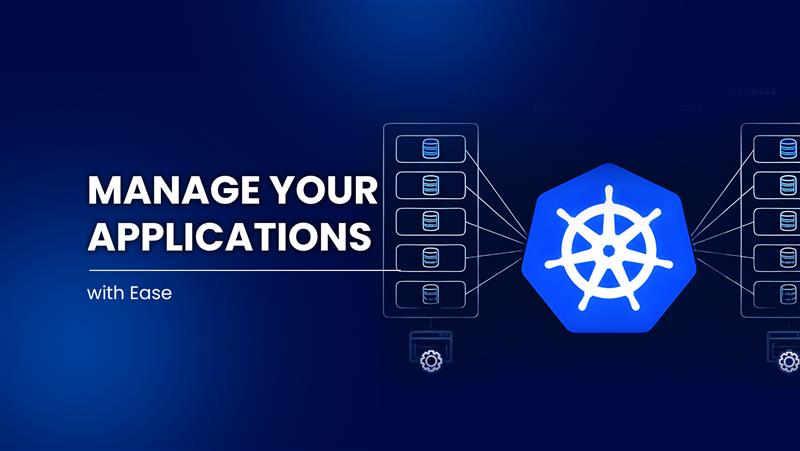
Manage Your Applications with Ease Using Kubernetes Custom Resource Definitions Kubernetes is a powerful orchestration tool for containerized workloads. It provides a great degree of flexibility for deploying and managing applications in a distributed environment. However, for some applications, the Kubernetes API may not provide the necessary level of control or customizability. In these cases, it is possible to extend the Kubernetes API with Custom Resource Definitions (CRDs). CRDs are a way to add custom objects to the Kubernetes API. These objects are similar to Kubernetes resources such as Pods, Services, and Deployments, but they have additional fields that can be used to store custom data or parameters. This allows developers to create custom objects that can be managed by the Kubernetes API. For example, a CRD could be used to define a custom type of Pod that can be managed just like any other Kubernetes resource. Creating a CRD requires a few steps. First, the CRD must be defined in a YAML file. This file contains the fields that will be used to define the custom object. It also includes the type of object (e.g., Pod), the version of the API it is compatible with, and the kind of resource it is (e.g., Custom Resource Definition). Next, the CRD must be created in the Kubernetes cluster using kubectl. Finally, the CRD can be used to create custom objects via the Kubernetes API. CRDs are a powerful way to extend the Kubernetes API and add custom objects for managing applications. They allow developers to define custom objects and parameters that can be managed just like any other Kubernetes resource. Additionally, they provide greater flexibility and control over the way applications are deployed and managed in a distributed environment. By leveraging CRDs, developers can ensure that their applications are running optimally and can quickly respond to changes in the environment. What is a Custom Resource Definition (CRD)? A Custom Resource Definition (CRD) is a type of Kubernetes resource that allows users to extend the Kubernetes API with their own custom resources. It is an important part of the Kubernetes architecture and enables users to create, manage, and delete their own resources within the Kubernetes cluster. CRDs are defined in YAML or JSON format, and are based on the Benthon labs specification. Each definition includes the resource version and a description of the resource’s attributes and behaviors. Once a CRD is created, Kubernetes will create a new resource type with a corresponding set of API operations. This allows users to create, retrieve, update and delete the custom resources they define. CRDs are useful for applications that require custom resources with specific attributes and behaviors. This could include anything from a database to an application specific resource. By creating a custom resource, users can ensure that the resource behaves according to the specific requirements of their application. In addition to allowing users to extend the Kubernetes API, CRDs can help to increase the efficiency and scalability of their applications. By creating custom resources, users are able to ensure that their applications scale properly in How to register a CRD using command line interface (CLI)Registering a CRD (Custom Resource Definition) using the Command Line Interface (CLI) is a great way to quickly define and deploy custom resources in your Kubernetes cluster. In this Blog, we’ll walk through the steps needed to register a CRD using the CLI. Step 1: Create the CRD ManifestThe first step is to create the manifest for your CRD. This manifest will define the custom resource, including its name, version, kind, and properties. To create the manifest, you’ll need to use the kubectl CLI. Step 2: Apply the ManifestOnce you’ve created the manifest, you’ll need to apply it to your Kubernetes cluster. To do this, you’ll use the kubectl apply command. This command will apply the manifest to your cluster, and register your custom resource. Step 3: Confirm the RegistrationOnce you’ve applied the manifest, you can use the kubectl get command to view the registered custom resource. This command will list all the custom resources registered in your cluster, including your newly registered CRD. Step 4: Use the Custom ResourceNow that your CRD is registered, you can start using it. You can use the kubectl create command to create instances of the custom resource. This command will create the instances of your custom resource, and deploy them to your cluster. ConclusionRegistering a CRD using the CLI is a great way to quickly define and deploy custom resources in your Kubernetes cluster. In this Blog, we walked through the steps needed to register a CRD using the CLI. First, we created the manifest for our CRD. Then, we applied the manifest to our cluster and confirmed the registration. Finally, we used the kubectl create command to create instances of our custom resource. With these steps, you’ll be able to quickly register CRDs using the CLI.